
Cybersecurity Roadmap
Explore clear cybersecurity pathways from first course to expert roles, aligned with Kingston University programmes. This cybersecurity roadmap provides a structured pathway that guides students from foundational knowledge to becoming job-ready professionals. It typically begins with learning core IT skills such as networking, operating systems, and basic cybersecurity concepts. These fundamentals are essential for understanding how systems work and how they can be protected.
The next stage involves specialisation, where students choose a specific career path such as ethical hacking, network security, cloud security, digital forensics, or governance, risk, and compliance (GRC). Each pathway requires a tailored set of skills, tools, and knowledge. Finally, the roadmap prepares students for employment by focusing on job readiness. This includes building a portfolio, creating a strong resume, preparing for interviews, and gaining certifications where necessary.
Certifications and Costs
Cybersecurity certification fees, difficulty, and renewals to build an strong knowledge about the Cybersecurity job market.
Certifications:
– Ethical hacking & Penetration Testing:
- CompTIA Security+ → ~£250–£320 (entry-level foundation)
- eJPT (Junior Pen Tester) → ~£150–£300 (beginner practical cert)
- CEH (Certified Ethical Hacker) → ~£820–£960 (widely recognised).
-Information security:
CompTIA Security+ → ~£250–£320
SSCP → ~£200–£300 (security admin level)
CISSP → ~£560+ (advanced, not beginner).
-Network security:
CompTIA Network+ → ~£200–£300 (network foundation)
CompTIA Security+ → ~£250–£320 Cisco CCNA → ~£250–£300 (networking + security basics).
Certifications:
Designed for students ready to specialise, this tier compares mid‑range certification prices, expected study time, and multi‑year renewal fees, helping you balance deeper career impact with realistic costs while you’re still at University.
-Cloud Security:
AWS Cloud Practitioner → ~£100–£150
Microsoft Azure Fundamentals (AZ-900) → ~£100.
AWS Security Specialty → ~£200–£300 (later stage).
-Cryptography:
CompTIA Security+ → ~£250–£320 Often supported by:
- Programming courses (Python)
- Academic study (degree/postgraduate).
Certifications:
Best for final‑year students planning long‑term careers, this tier focuses on higher‑cost, advanced certifications.
-Cyber Threat intelligence & incident response:
CompTIA Security+ → ~£250–£320
CompTIA CySA+ → ~£300–£400 (analyst-focused) GCIH (Incident Handler) → ~£900+ (advanced).
-Governance, Risk, and compliance:
CompTIA Security+ → ~£250–£320
CISA (Auditing) → ~£575–£760 CISM (Management) → ~£575–£725.
-Digital Forensics:
- CompTIA Security+ → ~£250–£320
- CHFI (Computer Hacking Forensic Investigator) → ~£800–£1,500 (varies with training).
Build your certification stack
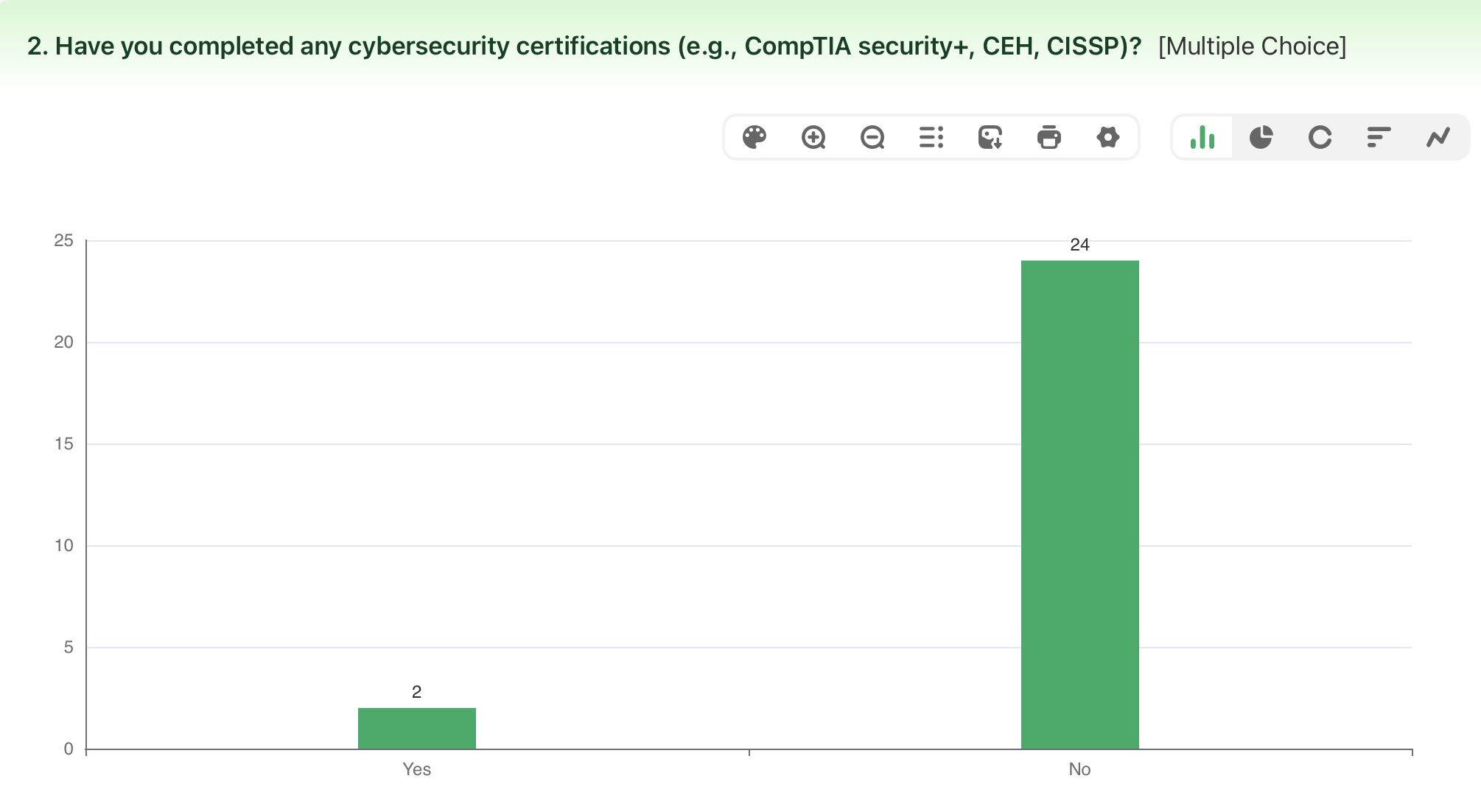
The fact that many students have not completed any certifications is not necessarily a major barrier to entering the cybersecurity job market. While certifications can enhance a candidate’s profile and demonstrate commitment to learning, they are not always essential for securing an entry-level role. Employers often place greater value on practical skills, hands-on experience, and the ability to apply knowledge in real-world scenarios. Students who have completed labs, built projects, or gained experience through internships or part-time IT roles can still be strong candidates, even without certifications.
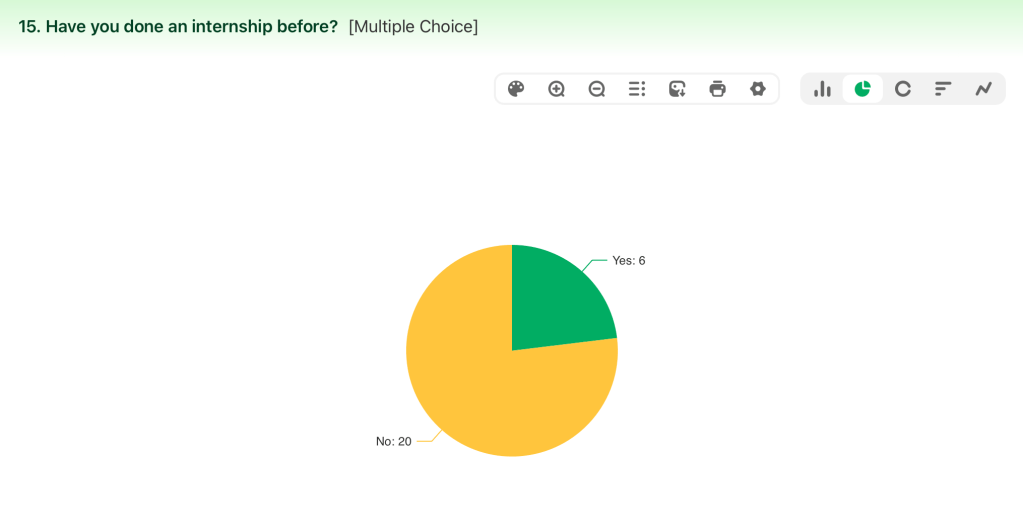
The survey revealed that many students have not completed an internship, which can be a significant barrier when entering the cybersecurity job market. Internships provide valuable real-world experience, allowing students to apply their knowledge in practical environments and develop skills that employers expect.
However, not having an internship does not mean students cannot enter the field. Many employers understand that gaining internships can be competitive and limited. Instead, students can build experience through alternative methods such as completing hands-on labs, working on personal projects, participating in Capture The Flag (CTF) challenges, or taking part in virtual internships.
 Cybersecurity Career Pathways Hub